
The Faversham-based tailor on the delights of combining work in the Garden of England with Savile Row
How did a graphic designer end up becoming a bespoke tailor? Talk us through the transformation and where you were trained. Do you still do any graphic design?
I studied graphic design in Lithuania and worked for Lithuanian National Television on live news. It was intense and stressful, especially aged just 20, and I realised I didn’t want to bring that energy home. I needed something creative that grounded me, so I signed up for an evening sewing class - and I fell straight into it. When I moved to the UK, I started researching the most traditional form of sewing here. That’s when I discovered bespoke tailoring. I didn’t even know what the word meant at first. I kept digging, came across a familiar Lithuanian name on Savile Row, Andrius Sergejenko - and that drew me in deeper. I researched even more, learned about his family business back home, and saw what real bespoke actually looks like. From there, the obsession started. I took online courses, learned from private tailors, studied everything - old books, new books, whatever I could get my hands on. I made jackets, spent hundreds of hours of work, destroyed many of them, hated my first attempts, but never stopped. I knew this was what I wanted my life to be. Now, tailoring is my full career path. I still use graphic design, but mainly for my own sketches and ideas, nothing more. My whole focus is bespoke.
Did your tailoring journey begin in Lithuania or when you arrived in the UK?
Mostly when I arrived in the UK, and especially during COVID. That period forced me to focus, study, and build my skill set properly. Lithuania was the start, but the UK is where it all became real.
You tailor for women only. Was that a conscious decision?
Yes. But it didn’t happen instantly. I worked a lot with bridal wear at the beginning, but I wanted to express my style: traditional bespoke combined with what I believe modern tailoring for the 21st century should look like. I use traditional construction, but the designs are different - strong, elegant, timeless. Pieces you can wear from day to night without changing a thing. That’s how I see the modern woman: elegant, powerful, and not dictated by fast fashion.
I studied graphic design in Lithuania and worked for Lithuanian National Television on live news. It was intense and stressful, especially aged just 20, and I realised I didn’t want to bring that energy home. I needed something creative that grounded me, so I signed up for an evening sewing class - and I fell straight into it. When I moved to the UK, I started researching the most traditional form of sewing here. That’s when I discovered bespoke tailoring. I didn’t even know what the word meant at first. I kept digging, came across a familiar Lithuanian name on Savile Row, Andrius Sergejenko - and that drew me in deeper. I researched even more, learned about his family business back home, and saw what real bespoke actually looks like. From there, the obsession started. I took online courses, learned from private tailors, studied everything - old books, new books, whatever I could get my hands on. I made jackets, spent hundreds of hours of work, destroyed many of them, hated my first attempts, but never stopped. I knew this was what I wanted my life to be. Now, tailoring is my full career path. I still use graphic design, but mainly for my own sketches and ideas, nothing more. My whole focus is bespoke.
Did your tailoring journey begin in Lithuania or when you arrived in the UK?
Mostly when I arrived in the UK, and especially during COVID. That period forced me to focus, study, and build my skill set properly. Lithuania was the start, but the UK is where it all became real.
You tailor for women only. Was that a conscious decision?
Yes. But it didn’t happen instantly. I worked a lot with bridal wear at the beginning, but I wanted to express my style: traditional bespoke combined with what I believe modern tailoring for the 21st century should look like. I use traditional construction, but the designs are different - strong, elegant, timeless. Pieces you can wear from day to night without changing a thing. That’s how I see the modern woman: elegant, powerful, and not dictated by fast fashion.
Talk us through your typical working week: Faversham vs London.
I’m basically at my studio 24/7 — and I love it. Time disappears when I’m working, so yes, sometimes friends and family get ignored. Most of my week is in idyllic rural Kent making the garments. When I have fittings or consultations, I travel to London. It’s the perfect balance: the calm of a small town and the energy of the city.
How many clients do you have? How many pieces per year?
Not many - yet - but it’s growing. Every recommendation is the biggest compliment, and most of my clients come about that way. I keep my client list intentionally small to keep the standard high. I produce around 20–30 bespoke pieces a year, depending on complexity. Quality first, always.
You also design couture, right?
Yes. Couture sits next to my bespoke line: more artistry, more handwork, more freedom. I learned a lot from videos in the beginning. Not the “correct” couture way, but it pushed me to experiment. My friend once saw me sewing every bead by hand with a needle and was shocked. Proper couture training is my next goal - ideally in her studio back in Lithuania.
You’re a fan of Pitti Uomo. Why do you go back? Clients or inspiration?
Both. Pitti has a unique energy - craft, colour, style, texture. Florence resets my creativity. But it’s also a chance to meet clients and industry people. And honestly, it’s also about time with my twin sister from Vilnius. I dress her in pieces I design, sometimes identical to mine but slightly different. We have the best time there.
You recently attended Bari Fashion Week in Puglia. What was the experience like?
A genuinely positive surprise. The hospitality was incredible, and the respect for real craft was sincere. We spoke about the real issues across cinema, music, and tailoring - and how each industry is holding the other up in this chaotic, tech-driven world, especially with AI pushing everything forward. It felt like witnessing a civilisation that’s fading and needs defending. Bari Fashion Week felt like a family reunion - warm, effortless, and instantly homely. It’s small now, but it will grow. I met truly good people there. And the Mandela Awards - meeting Ndileka Mandela, Mandela’s granddaughter, was a true honour. All the award winners’ work is inspiring, a genuine example of the kind of impact we should all strive to follow.
I’m basically at my studio 24/7 — and I love it. Time disappears when I’m working, so yes, sometimes friends and family get ignored. Most of my week is in idyllic rural Kent making the garments. When I have fittings or consultations, I travel to London. It’s the perfect balance: the calm of a small town and the energy of the city.
How many clients do you have? How many pieces per year?
Not many - yet - but it’s growing. Every recommendation is the biggest compliment, and most of my clients come about that way. I keep my client list intentionally small to keep the standard high. I produce around 20–30 bespoke pieces a year, depending on complexity. Quality first, always.
You also design couture, right?
Yes. Couture sits next to my bespoke line: more artistry, more handwork, more freedom. I learned a lot from videos in the beginning. Not the “correct” couture way, but it pushed me to experiment. My friend once saw me sewing every bead by hand with a needle and was shocked. Proper couture training is my next goal - ideally in her studio back in Lithuania.
You’re a fan of Pitti Uomo. Why do you go back? Clients or inspiration?
Both. Pitti has a unique energy - craft, colour, style, texture. Florence resets my creativity. But it’s also a chance to meet clients and industry people. And honestly, it’s also about time with my twin sister from Vilnius. I dress her in pieces I design, sometimes identical to mine but slightly different. We have the best time there.
You recently attended Bari Fashion Week in Puglia. What was the experience like?
A genuinely positive surprise. The hospitality was incredible, and the respect for real craft was sincere. We spoke about the real issues across cinema, music, and tailoring - and how each industry is holding the other up in this chaotic, tech-driven world, especially with AI pushing everything forward. It felt like witnessing a civilisation that’s fading and needs defending. Bari Fashion Week felt like a family reunion - warm, effortless, and instantly homely. It’s small now, but it will grow. I met truly good people there. And the Mandela Awards - meeting Ndileka Mandela, Mandela’s granddaughter, was a true honour. All the award winners’ work is inspiring, a genuine example of the kind of impact we should all strive to follow.
Where do you see yourself in five years?
With a stronger international presence, a larger atelier, and a solid team behind me but without compromising the bespoke standard.
Any specific goals you want to achieve?
To create a signature silhouette that’s instantly recognisable. The goals are big, and I’m still small, but I believe in them.
Talk us through your house style. What defines a Loreta Verikas piece?
Sharp lines, clean strength, feminine structure. I design for women who want presence not loud, not timid. My garments enhance posture and confidence. Women deserve to be seen.
You’re a fan of Huddersfield Fine Worsteds. Which fabrics draw you in?
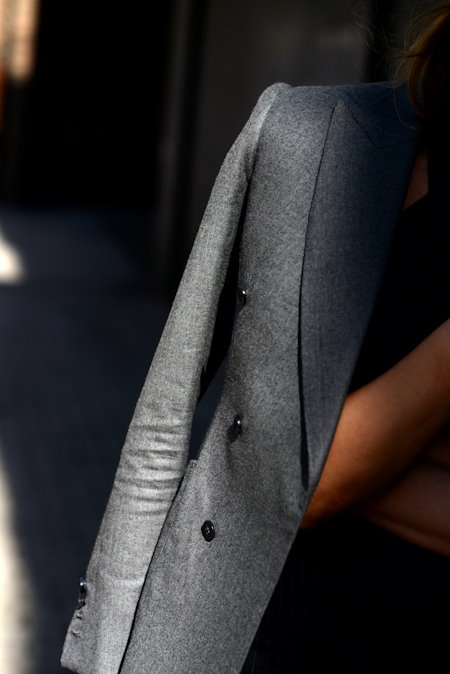
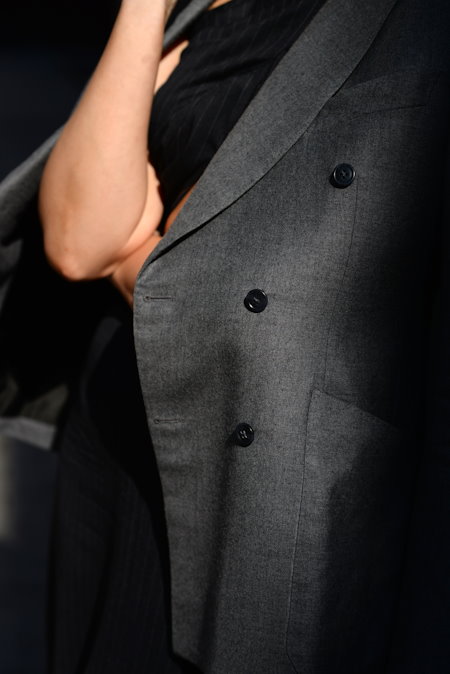
I love their Flannels collection and their Chelsea Super 110s and 120s are my favourites, perfect structure for womenswear, elegant but strong. Their flannels are ideal for sharp suits with real comfort. They create the silhouette I want.
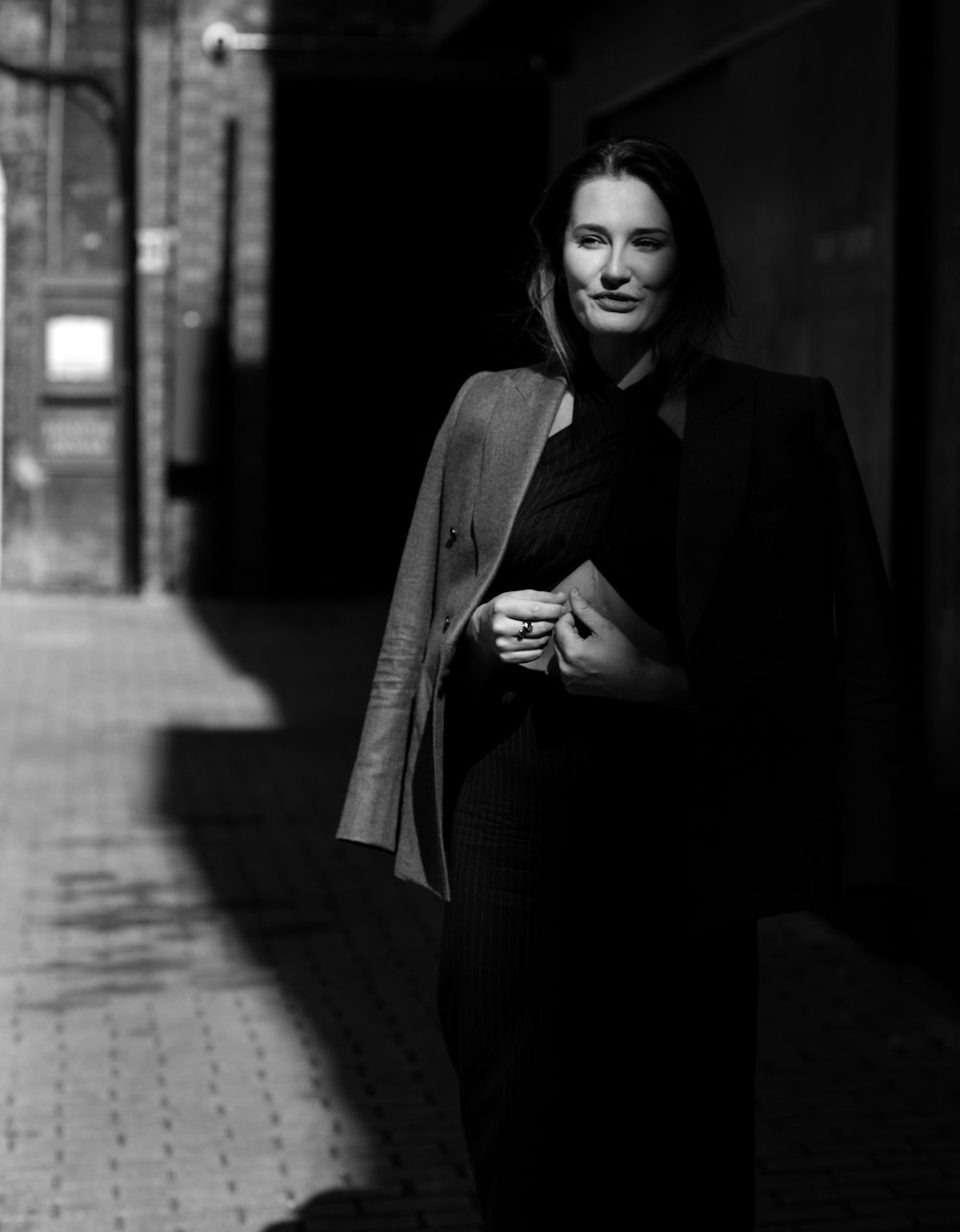
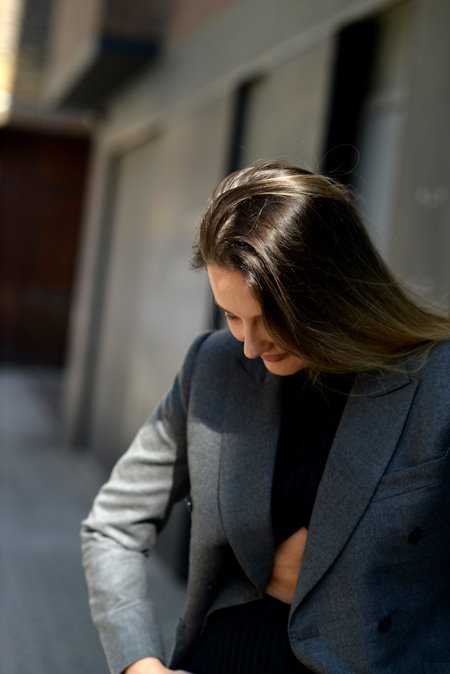
Talk us through the outfit you were wearing on the photoshoot in London recently…
The idea was born in Lake Como after visiting Carnet and seeing a copy of a 1950s Bazaar magazine. That era’s elegance stayed in my head. I created a top and skirt for a wedding-guest outfit for a client, then realised the look needed a jacket and stripes. I found leftover Huddersfield cloth in my studio and started combining ideas. I imagined how my lawyer friend in London would look wearing it to the office - powerful, sharp, elegant. That’s how the outfit was born: I always think about the woman who would wear it.
https://www.loretaverikas.com/
With a stronger international presence, a larger atelier, and a solid team behind me but without compromising the bespoke standard.
Any specific goals you want to achieve?
To create a signature silhouette that’s instantly recognisable. The goals are big, and I’m still small, but I believe in them.
Talk us through your house style. What defines a Loreta Verikas piece?
Sharp lines, clean strength, feminine structure. I design for women who want presence not loud, not timid. My garments enhance posture and confidence. Women deserve to be seen.
You’re a fan of Huddersfield Fine Worsteds. Which fabrics draw you in?
I love their Flannels collection and their Chelsea Super 110s and 120s are my favourites, perfect structure for womenswear, elegant but strong. Their flannels are ideal for sharp suits with real comfort. They create the silhouette I want.
Talk us through the outfit you were wearing on the photoshoot in London recently…
The idea was born in Lake Como after visiting Carnet and seeing a copy of a 1950s Bazaar magazine. That era’s elegance stayed in my head. I created a top and skirt for a wedding-guest outfit for a client, then realised the look needed a jacket and stripes. I found leftover Huddersfield cloth in my studio and started combining ideas. I imagined how my lawyer friend in London would look wearing it to the office - powerful, sharp, elegant. That’s how the outfit was born: I always think about the woman who would wear it.
https://www.loretaverikas.com/